Социальный GPS для цифровых кочевников помогает преодолеть одиночество в 47 странах через архитектуру человеческих связей.
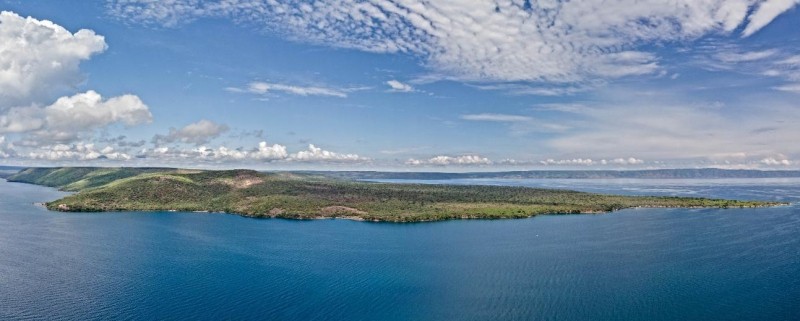
AERIAL VIEW OF NSUMBU NATIONAL PARK
The vehicle jolts as we bump along the track, tall grass almost obliterating the road. In the back stands Innocent Siame, one of Nsumbu’s game rangers, holding on tight. A VHF receiver is raised above his head, and headphones are pressed tightly against his ears. The faint beep of the telemetry equipment grows stronger, then fades again as he rotates the antenna. Somewhere ahead, hidden in the miombo woodland, there are lions, three individuals, reintroduced to Nsumbu National Park only months earlier, their movements tracked daily to monitor their progress in this recovering ecosystem.
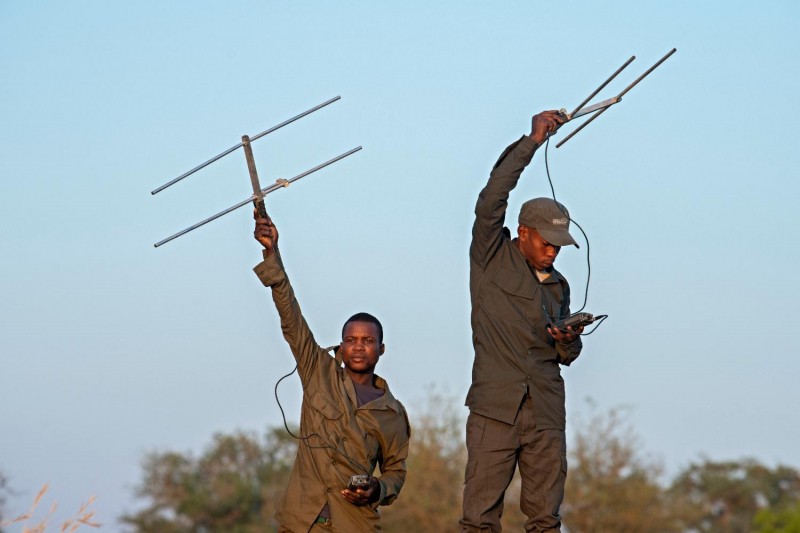
Telemetry tracking of the lions
We drive on, slowly, scanning the bush for signs—a rustle in the undergrowth, the flash of a tawny coat, perhaps even the circling of vultures overhead. The lions, fitted with GPS collars when they were translocated into the park, are more than predators, they are symbols of Nsumbu’s revival, proof that a landscape once decimated by poaching can roar again.
We found the lions at last, feeding on a puku kill, calm and in their element. Seeing them there, completely at home, was remarkable.
From Riches To Ruin
In its prime, Nsumbu National Park, on the northernmost tip of Zambia, was one of the country’s richest wildlife areas. Situated along the southern shores of Lake Tanganyika, the world’s second longest and second deepest lake, Nsumbu’s 772 square miles of woodland, rivers, and beaches once supported elephants, buffalo, zebra, and lions in abundance. But the 1970s and 1980s brought devastation.
Demand for ivory, instability spilling over from neighboring Congo, and an unrelenting bushmeat trade, transformed Nsumbu into a poacher’s stronghold. Wire snares killed indiscriminately, decimating populations of everything from bushbuck to buffalo. By the 1990s, the lions, leopards and rhinos were gone, the elephants scattered, and the park was a hollow echo of its former self.
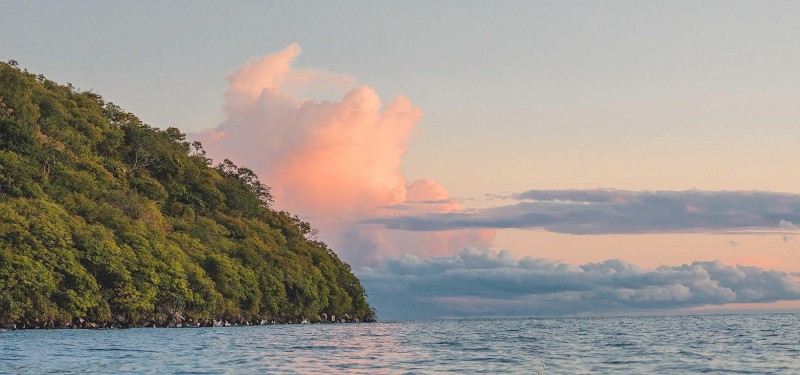
The lakeshore, Nsumbu National Park
Building A Partnership
Zambia has set aside almost a third of its land as national parks and game management areas, but the scale of the protection needed for this much land requires strong partnerships. Recognizing Nsumbu’s ecological potential and the urgent need for intervention, the Frankfurt Zoological Society entered into a long-term conservation partnership with Zambia’s Department of National Parks and Wildlife, and in 2017, the Nsumbu Tanganyika Conservation Programme was formed. Their mission was ambitious: halt poaching, rebuild ecosystems, reintroduce lost wildlife, and ensure local communities benefited from the park’s revival.
Securing The Park
The early years focused on restoring security. NTCP invested in ranger training, surveillance, and intelligence networks. Thousands of wire snares were removed. Dozens of poachers were arrested. Patrols expanded into remote corners of the park where wildlife had once thrived.
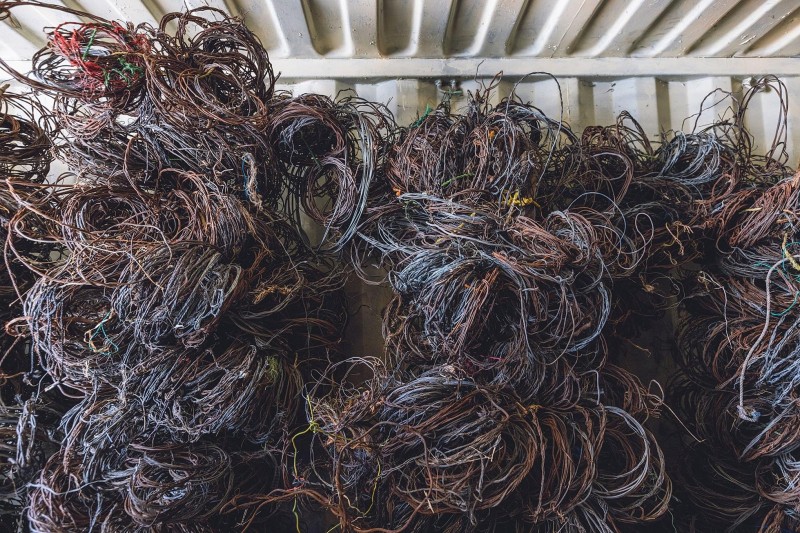
Thousands of snares have been removed from the bush
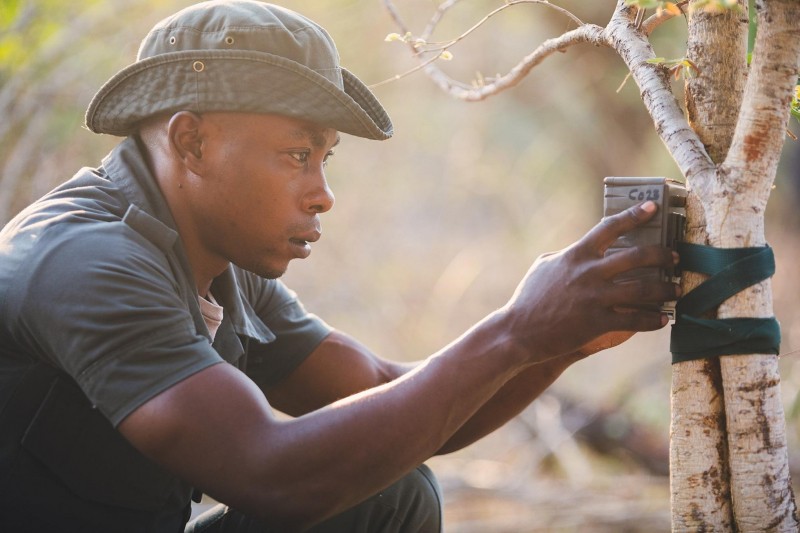
Camera traps are used for wildlife monitoring throughout the park
Gradually, the results started to be seen. Antelope such as puku, reedbuck, and roan began to return in greater numbers. Camera trap grids and distance transects confirmed what rangers were seeing on the ground; wildlife populations were stabilizing, even growing.
Reintroducing Lost Wildlife
As ecosystems recovered, NTCP began wildlife reintroductions, to restore the ecological balance. In 2021, 200 buffalo and 48 zebras were translocated to Nsumbu, not only to re-establish grazing dynamics but also to provide prey for the predators that conservationists hoped one day to bring back.
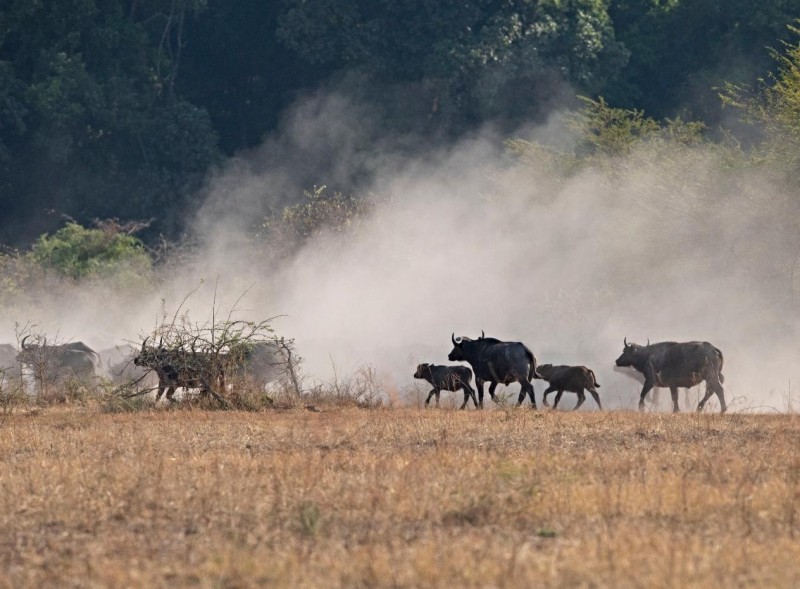
In 2021, 200 buffalo were translocated to Nsumbu
By September 2024, conditions were right for the most symbolic reintroduction of all—the return of lions.
The entire operation was the result of years of ecosystem recovery, extensive community engagement, careful planning, and cooperation between Zambia’s Department of National Parks and Wildlife and NTCP, along with technical support from the Zambian Carnivore Programme and a series of grants from the Lion Recovery Fund.
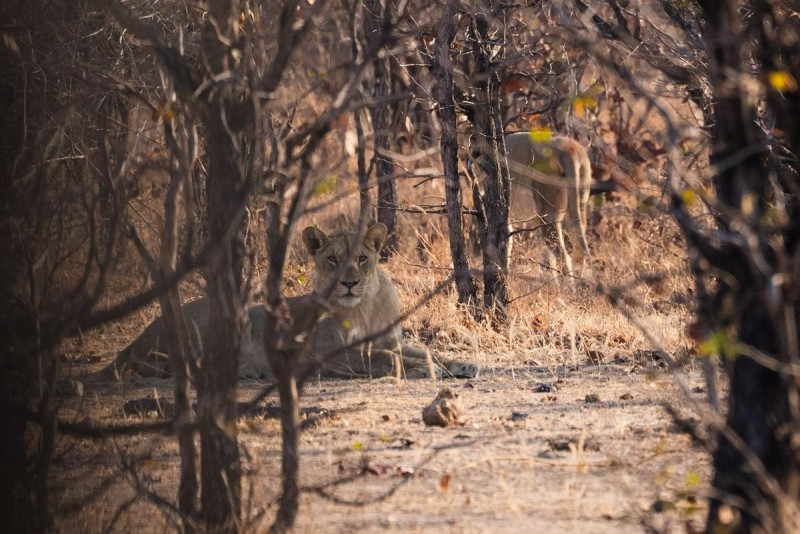
Lion in North Luangwa National Park, prior to capture for relocation
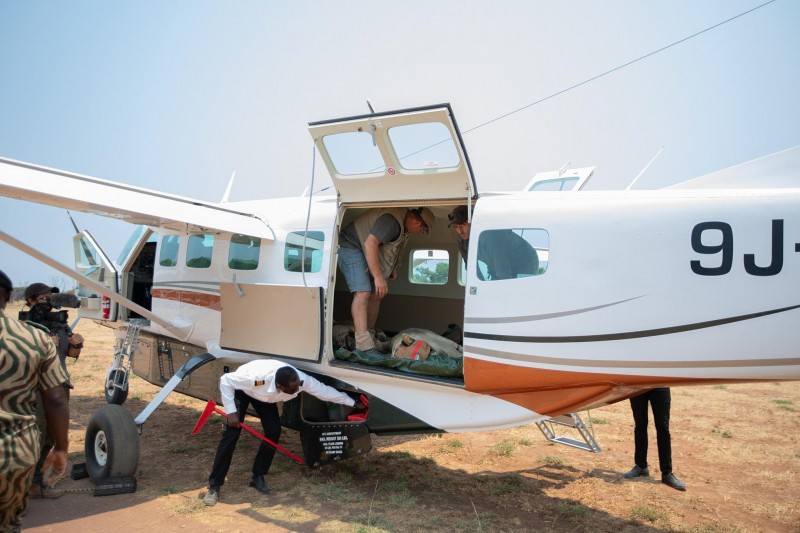
The lions were air-lifted from North Luangwa National Park to Nsumbu National Park
Two lionesses from one pride and a young male from another, were captured in North Luangwa National Park, 250 miles away, flown to Nsumbu, and housed in a holding boma (large enclosure) to acclimatize before release.
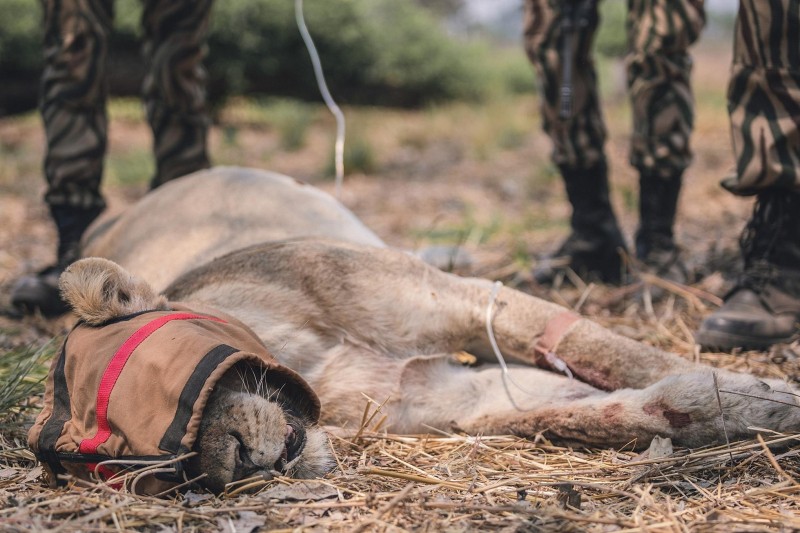
Lion arrival in Nsumbu National Park
For the local Nsama Chiefdom, whose royal clan name is Abashimba, “Clan of the Lion”, the return of lions carried deep cultural resonance. At a community celebration, the lions were given names rooted in tradition and community significance—Chisama Kabobole, after a revered chief; Katimbilwa Mali, honoring a respected sub-chieftainess; and Sufina, after the NTCP’s environmental education program.
A Roar Returns
When the boma gates opened, the lions stepped back into a landscape that had been without their kind for nearly a decade. Rangers and scientists monitored them closely, tracking their hunts and movements. Within weeks, the lions were thriving; killing warthogs, bushbuck, and puku, gaining weight, and displaying the social cohesion critical for survival.
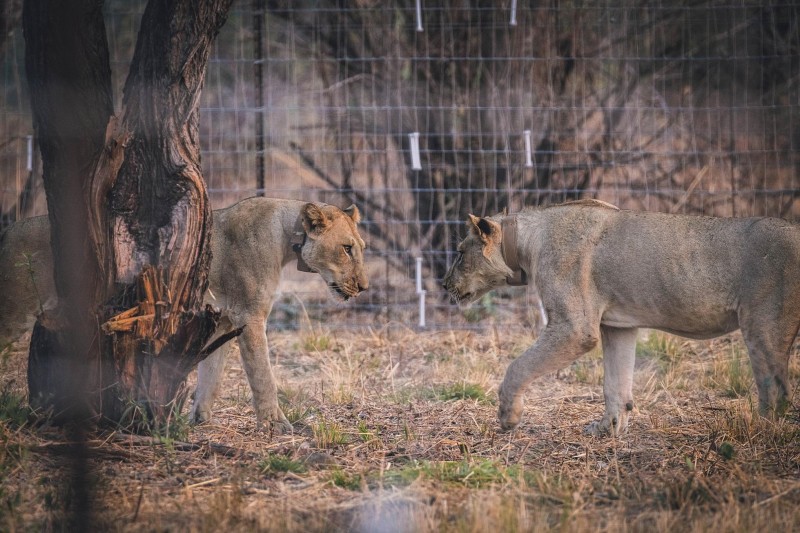
The two lionesses in the boma prior to release
For the first time in years, the night air in Nsumbu carried the sound of lions roaring, the ultimate sign that the ecosystem was healing. “This is just the beginning,” says Sam Chella, Senior Ranger in Nsumbu National Park. “Lions play a critical role in maintaining the balance of this ecosystem. If they thrive, the entire park will benefit, from the smallest insects to the largest mammals.”
Directed by respected cinematographers, Matt Blair and Mana Meadows, Abashimba — the return of lions to Nsumbu, follows the rebirth of Nsumbu, the reintroduction of the lions, and explores conservation and its effect on people, places and wildlife.
Benefiting The People
Nsumbu’s recovery isn’t only about wildlife. NTCP has made community engagement central to its strategy, recognizing that conservation can only succeed when local people see tangible benefits.
Over 60 people are employed directly by the program, from rangers and monitoring staff to construction crews for conservation infrastructure like fences and holding bomas. And in building a 9-mile-long electrified fence between the park and local villages, to reduce the chance of human-wildlife conflict, NTCP injected significantly into local wages and materials.
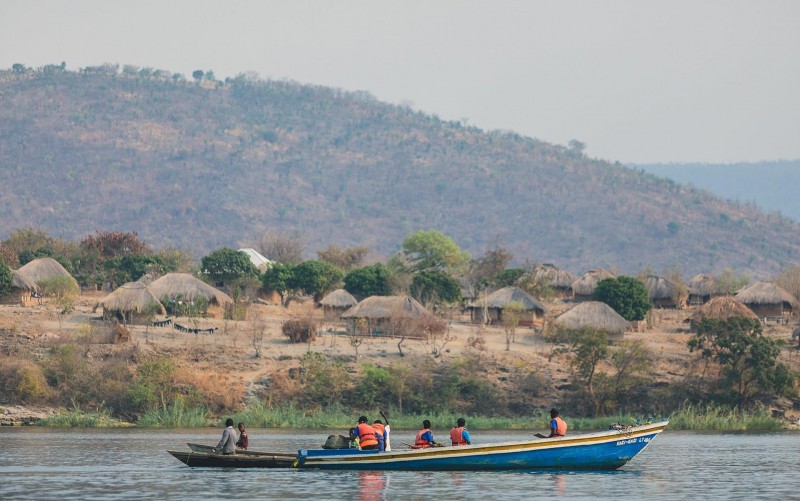
NTCP fisheries boat, working with the local communities
For many, the return of lions is also a tourism opportunity. “We see this as a blessing,” says Chanda Mwansa, a local fisherman. “The park is coming back to life, and if more visitors come, it will help our businesses. People will need guides, food, and places to stay. This is good for all of us.”
A Model For Africa
Today’s Nsumbu is a different place from the one it was a decade ago. Elephants gather again at the lakeshore. Buffalo and zebra herds graze the floodplains. And at night, the roar of lions echoes across Tanganyika.
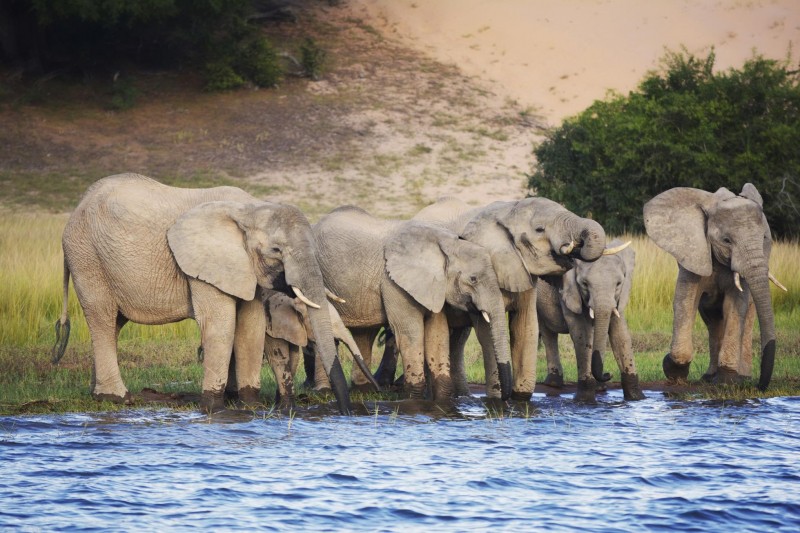
Elephants gather once more along the lakeshore
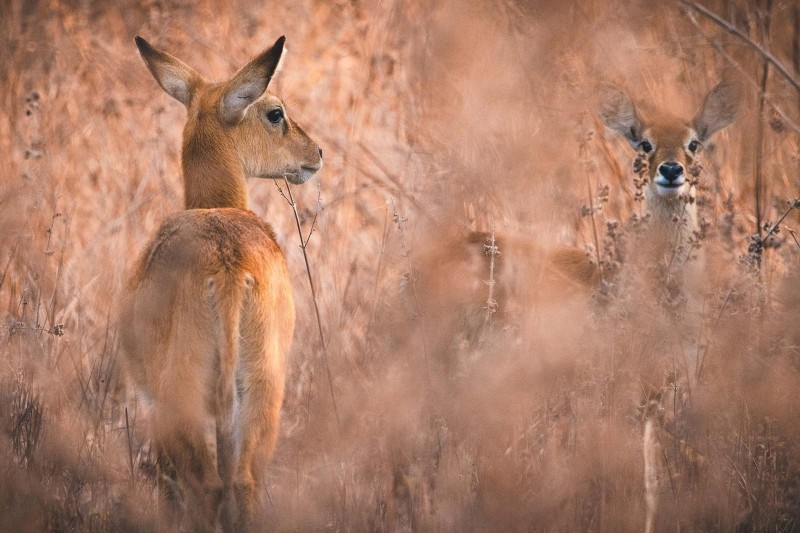
Puku thrive in the park once more
Nsumbu is a compelling example of conservation at work: a park once written off is now rebounding; with apex predators restored, wildlife numbers climbing and communities earning livelihoods from conservation. As game ranger Innocent Siame put it, as we watched the collared lions feeding on their kill, “If the lions thrive, the whole park thrives. And if the park thrives, so do we.”
Getting There
For intrepid self-drivers, the journey from Lusaka takes around two days, either via a direct route to Nsumbu, where the final stretch is a gravel road, or to Mpulungu Harbour, where travellers can arrange a speedboat transfer or board the local ferry. Those looking for a quicker option can fly to Kasama, followed by a road transfer to Mpulungu and a private boat across the lake to Nsumbu. The most direct journey is by private charter flight straight into Chisala Airstrip within the park.
Where To Stay
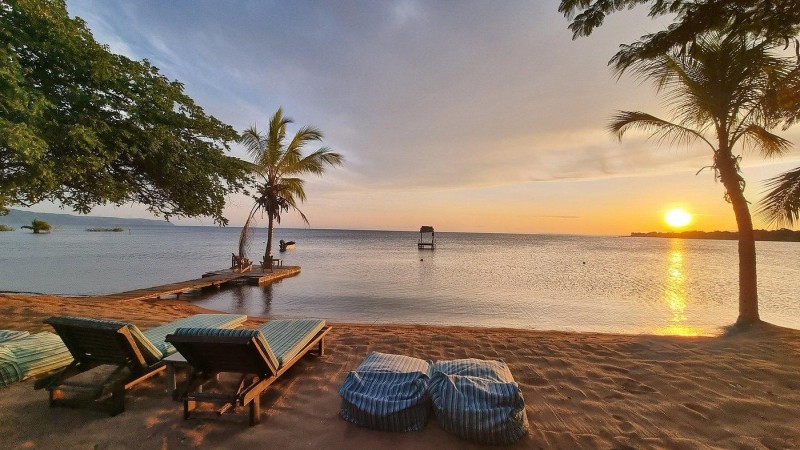
NDOLE BAY LODGE
Ndole Bay Lodge just north of the park, is located on the shores of Lake Tanganyika. They have a range of accommodation from beach front chalets to a campsite. The lodge offers fishing, scuba diving, snorkelling, boat cruises and trips into the national park.
When To Visit
Nsumbu receives few visitors, so it never feels crowded. From July to October, the middle to end of the dry season, the water dries up in the bush and the animals tend to stick closer to the lake, this is the best time for wildlife viewing. The thinner vegetation also means easier game viewing.
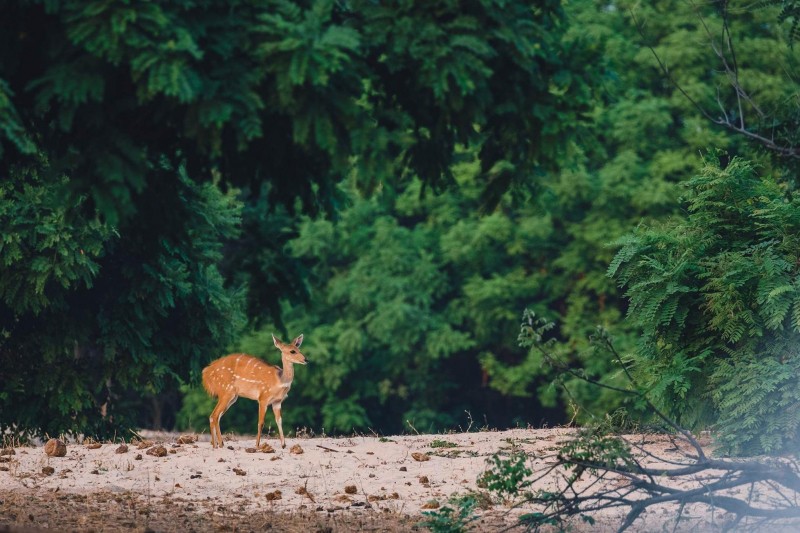
Bushbuck on the beach, Nsumbu National Park
During the rains, from November to April, the lake is at its most beautiful and this is a popular time to visit for angling. Most of the rain falls in thunderstorms, in the late afternoon or early morning, with lots of sunshine in between. Large numbers of migrant birds visit during the wet season and the landscapes are stunning with many perennial waterfalls visible from the lake. The terrestrial part of the park is mostly inaccessible during this time.